Response to Texanarob on Public Transport.

It would take you thirty seconds to find this shit out with your AI of choice but, Jesus Christ, you’re getting bodied in the comments already.

So, here you are. Loads of research you won’t read because you’ve “done your own research” – note that having an opinion isn’t quite the same. As I mentioned I went to the Minister with a folder full of this shit ten years ago. I didn’t turn up with a stupid grin and a tree hugger badge. Massive savings to the economy directly, massive savings due to the improved health-related outcomes and, on top of that, if you take things like bus lanes and cycle lanes actually seriously it reduces congestion. The ALTERNATIVE (the one proposed by the Roads Service in Northern Ireland) is BUILD MORE ROADS – which is what happens when you stick 600 road engineers in a building and ask them for solutions.

Most objections to PT improvements tend to come from people who don’t really want the poors to get benefits. But even Phony Stark thinks mass transit is a smart idea (as he reinvents trains and buses for the techbros)

With the burden of proof on my side resolved, you can see why I’m supporting these moves. When your mum is driving you to your next appointment, she would have less traffic.
But here we are. Examples of how public transport did all of the things I said – and not just congestion. Nice of them to keep researching it to provide up to date data.

Public transport & traffic congestion / traffic flow
Anderson, 2014 – Los Angeles transit strike “natural experiment”
Reference: Anderson, M. L. (2014). Subways, Strikes, and Slowdowns: The Impacts of Public Transit on Traffic Congestion. American Economic Review, 104(9), 2763-2796.
What it does: Uses a multi-week LA transit strike as a shock and measures what happens to congestion when transit is removed.
Key findings: The strike increased peak-period delays by about 47%, implying that operating LA’s transit system reduces traffic delays by billions of dollars per year.

Beaudoin, Farzin & Lin Lawell, 2015 – Literature review on transit & congestion
Reference: Beaudoin, J., Farzin, Y. H., & Lin Lawell, C.-Y. C. (2015). Public transit investment and traffic congestion: A systematic review of the empirical literature. Transport Policy / Transportation Research family. 
ScienceDirect
Key findings: Reviews empirical work on how transit investment affects congestion and air quality. Concludes that PT can reduce congestion, especially in dense cities and congested corridors, but effects are context-dependent (land use, road pricing, etc.).

Beaudoin & Lin Lawell, 2016+ – Theory & empirical work on congestion relief
Reference: Beaudoin, J., & Lin Lawell, C.-Y. C. (2016). The effects of public transit investment on congestion, auto travel demand and air quality. In The Economics of Transport (chapter). 
clinlawell.dyson.cornell.edu
Key findings: Shows that transit investment can reduce car travel and improve air quality; congestion relief is significant where transit is competitive in time/cost and road networks are already saturated.

Monetary valuation of congestion relief from PT
Reference: Comparative review of “Evaluating the Congestion Relief Impacts of Public Transport in Monetary Terms” (2025 working paper / review). 
ResearchGate
Key findings: Summarises international evidence that PT absorbs peak-hour demand, increases overall network capacity and reduces congestion, and converts these effects into monetary values for cost-benefit analysis.

Tallinn, Estonia – the classic free PT case
Cats, Reimal & Susilo, 2014 – Before/after evaluation
Reference: Cats, O., Reimal, T., & Susilo, Y. (2014). Evaluating the Impacts of Fare-Free Public Transport Policy: The Case of Tallinn, Estonia. Transportation Research Record, 2415, 89-96. 
repository.tudelft.nl
Key findings:
Fare-free PT increased boardings, especially in lower-income districts (upwards of ~10% in some areas).
It improved mobility for unemployed and low-income residents.

Chen, 2014 – Mode choice under Tallinn’s free PT policy
Reference: Chen, X. (2014). How the free public transport policy influences public transport mode choice: The case of Tallinn, Estonia (Master’s thesis).
DIVA Portal
Key findings: Fare-free policy changed perceptions of PT and increased its use, but price alone was not enough to induce large numbers of drivers to switch without parallel measures (parking, service quality, etc.).

Dunkirk (Dunkerque), France – free buses + network upgrade
Urban Mobility Observatory / French studies
Reference: EU Urban Mobility Observatory. (2019). Free public transport in Dunkirk, one year later. 
EU Urban Mobility Observatory
Key findings:
After introducing free bus travel and redesigning the network (September 2018), bus ridership increased by 65% on weekdays and 125% on weekends.
A follow-up study reported a “significant contribution” to reducing private car use; about half of new bus users previously drove for the same trips.
Local evaluation & surveys

Reference: Observatoire des villes du transport gratuit – Dunkirk study on young people & mobility. 
obs-transport-gratuit.fr
cbwmagazine.com
Key findings:
Many respondents reported using the bus instead of a car; a small but non-trivial share sold a car or avoided buying a second car.
Reported benefits: better access to jobs and social activities, reduced transport costs, perceived improvement in air quality and urban environment.

Germany’s 9-Euro Ticket – deep discount nationwide
Klotz et al., 2024 – Highway traffic response
Reference: Klotz, P. A., et al. (2024). The Impact of Public Transport Subsidies on Highway Traffic: Evidence from Germany. Working paper. 
EconStor
Key findings:
The temporary 9-Euro Ticket (summer 2022) led to a more than 18% decrease in highway passenger traffic in Germany during the policy period.
Public transport demand increased by ~44%, with survey evidence of some substitution from car to PT and reduced particulate pollution.
Effects on car traffic were significant but mostly temporary, fading when the ultra-cheap fare ended.

UITP, 2020 – “Full Free Fare Public Transport” policy brief
Reference: UITP (International Association of Public Transport). (2020). Full Free Fare Public Transport (Policy Brief). 
UITP
Key findings:
Across multiple free-fare cities, ridership tends to rise substantially.
However, reductions in car use are “quite limited” in many cases; a lot of the extra PT use comes from walking/cycling and induced trips.
Where there is modal shift from car, potential benefits include improved local air quality, road safety and noise reduction, but capacity and funding constraints can offset some gains.

Wider co-benefits (health, emissions, equity)
Built environment, active travel & PT – health + congestion co-benefits
Reference: Smith, M., et al. (2017). Systematic review of built environment effects on physical activity and active travel. Health & Place, 43, 287–299. 
PMC
Key findings: Replacing motorised trips with active modes and PT reduces congestion and emissions while improving physical activity and public health.
Low-carbon transport in cities – air quality & health
Reference: International Transport Forum / OECD. (2025). Health Impacts of Low-Carbon Transport in Cities: Evidence for Decision-Making. 
ITF OECD
Key findings:
Shifting from private cars to PT, walking and cycling cuts greenhouse gases and improves air quality.
Associated reductions in premature deaths and chronic disease make PT expansion highly cost-effective.

Fare-free PT & social inclusion
Reference: Štraub, D. (2025). Re-examining fare-free public transport for greater inclusivity: Evidence from Brazil’s student fare-free law. Case Studies on Transport Policy. 
ScienceDirect
Key findings: Shows how fare-free schemes for low-income students improve educational access and social inclusion, illustrating non-traffic benefits of free PT.

Remember where you are from. You’re from Earth.

Demonstrating “all” is difficult. Most of the time, the climate doesn’t follow our dire predictions. The date arrives and the apocalypse doesn’t happen.

This is why so many movies (2012, The Day After Tomorrow) depict two things

1. The disruption is happening faster than predicted.
2. It’s happening to nice, educated, relatable white people, not to strangers far from us.

Hence drama ensues. But this is a movie, right?

The reality is that it will be slightly slower than predictions but it will be uneven. Entire regions populated by people who don’t look like you will be devastated by floods or hurricanes. Meanwhile you’ll complain that the summer was a bit rubbish (or in sailing circles that the westerlies and trade winds patterns are changing).

The locations hit worst will be places that you like to go on holiday or regions which make your products cheaply.

But it doesn’t have to be like this.

Providing developing countries with modern technology (such as solar) in sufficient quantities could change them from being a carbon-producing economy into a carbon neutral economy. The impact of that alone could be massive – China already has realised that their rapid industrialisation has had a negative impact and they’re taking steps to produce more solar every year than most countries will ever install in a lifetime.

We have the technology to create a future-proofed 22nd Century civilisation. But like climate disruption, it is applied unevenly.

The negatives of globalisation can be turned into positives if we remember that we all live on the same sphere (the pale blue dot) and that what happens in London or Mumbai or Durban will have an effect on lives in Shenzhen, Helsinki and Melbourne.

Remember this when someone asks you where you’re from.

You’re from Earth

The Realm of the Possible: Inventing a New City

After DRIVING past the new “death trap” paint on the Sydenham Bypass that’s meant to be a “cycle lane”, I am comforted to see that some cities have leaders who are prepared to re-make the world as we would like it, and not just rely on what has been past. .

Seattle to permanently close 20 miles of streets to traffic so residents can exercise and bike on them

Nichola Mallon, our Infrastructure Minister, isn’t being advised on what’s in the realm of the possible. It’s the problem with that department (and in particular Roads Service). When you ask a road engineer on what would solve a problem, they think in terms of roads.

I tend to think of the realm of the possible extends from impossible to impossible!

So how do we get people cycling and walking more?

Is it impossible to make cycle lanes which are more than paint?

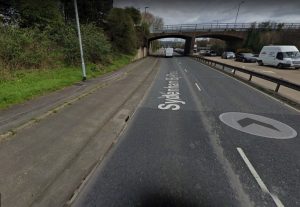
No, plainly not. Here is a part of the Sydenham Bypass with a kerb! This would make cycling much safer. So, why is the department so happy with a line of paint? If we have it for part of the Sydenham Bypass, why not all of it? Why not extend it to Bangor and Ards?
Is it impossible to close BT1 to private street traffic?

No, it’s not. In fact, a lot of that is in the Regional Transportation Strategy including deflecting traffic from hope street straight to the Ormeau/Cromac area via a new road at Bankmore Square. Essentially the only cars in the centre outside of emergency services and buses, should be taxis and disabled vehicles.
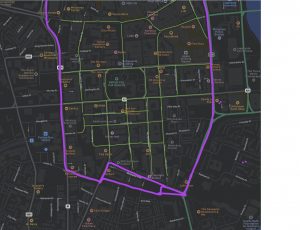
Is it impossible to turn every non-disabled parking space in that area into cycle lanes to protect cyclists from buses, lorries and taxis?

No, obviously. We will see a decrease in traffic overall after the pandemic passes as a lot of people-intensive businesses will be re-looking at their leases for commercial property (some large businesses are closing multiple sites and having their workers work from home because working from home can improve productivity (as long as the kids are at school!) If you think about it, all of the streets in the CBD of Belfast are host to “car corpses”. Cars which are driven in and just lie dead all day. Our streets are littered with them. What are the knock on effects of that?

So we don’t need as many parking spaces? Or commercial parking lets? Or office buildings?

No, we really don’t – so that frees up huge amounts of space for cycling and pedestrians. Think of the lives saved from cars not careening into people.

What about those offices? Will they lie empty?

Well, Belfast City Council has been trying to square the circle of getting people to move into the centre of the city, but there just hasn’t been the space. So, if we are talking about maybe a million square feet of unoccupied office space right now and perhaps up to five times that in two years, that’s a thousand 1000 sq ft apartments now, and 5000 in the next decade. That solves the “Belfast is a graveyard” problem every evening as well as fostering small business in the city centre – including the eateries in the city which really deserve a bit of an uplift after the runaway rates and Covid-19 related collapse.

Thousands more living in the city would be a massive uplift for the city economy. And we have the space.

Are there other things we can change?

Of course, with decreased traffic and more reliance on public transport, we don’t need that M2/Westlink Exchange upgrade. That’s a waste as it is, it’s doubly so after the pandemic. We could invest that in live/work apartments in the city centre. We could invest in arterial segregated cycle lanes from four quarters of the city as well as dedicated cycle freeways along the M1, M2 and A2. With the decreased pollution of decreased traffic, Stockman’s Lane might be bearable to cycle through.

Anything else?

Well, I’m always going to say “free public transport”. The fact that it would decrease pollution and particulate matter, reduce the burden of road repairs on the taxpayer, increase social and economic mobility for just about everyone, equalise some of the society and put cash in the pockets of low and middle income workers is just the tip of the iceberg.

We have an opportunity to change the city and be an exemplar. Wouldn’t it be great to be proud of Belfast for things that were great and that worked? Stuff we could boast about that was good on a global stage and not just “better than what we deserve”. Can’t we aspire to greatness as a city? Celebrate our best and brightest?

Rather than a ship that sank, forty years of civil war and an alcoholic footballer?
Sustainable Electro-Motive

I’m attending the Eden Project Communities Camp this May and that’s where I hope to talk about Sustainable Electro-Motive. This project ties several interests into one whole. One part is working with my friend Stuart and his extracurricular work with GreenPower NI. One part is my interest in maintaining our way of life without necessarily … Continue reading “Sustainable Electro-Motive”

I’m attending the Eden Project Communities Camp this May and that’s where I hope to talk about Sustainable Electro-Motive.

This project ties several interests into one whole. One part is working with my friend Stuart and his extracurricular work with GreenPower NI. One part is my interest in maintaining our way of life without necessarily increasing our impact on the environment (and ideally, reducing our impact massively). My other interests are social enterprise, the democracy of community energy resources, the digitisation of energy and transport (which is more about the change in the economies than any real addition of technology).

I hope SEM to be a great example of a social enterprise, of “altrupreneurship.

Dissecting a Translink Policy

I had a thought this morning. Translink, the local bus and rail service, provides transport tickets for a price. If you travel after 0930 in the morning, tickets are reduced in price. This is to entice you to travel later. This is exactly the wrong thing to do. It’s designed to alleviate crowding on busy … Continue reading “Dissecting a Translink Policy”

I had a thought this morning.

Translink, the local bus and rail service, provides transport tickets for a price. If you travel after 0930 in the morning, tickets are reduced in price. This is to entice you to travel later.

This is exactly the wrong thing to do.

It’s designed to alleviate crowding on busy commuter vehicles during rush hours. It doesn’t really work because people travel when they need to.

We need to encourage more people to travel on a bus or train before 0930 thereby alleviating traffic pressure while not impacting productivity. My solution would be to make all bus and train fares free before 9 o’clock. If that doesn’t encourage more people to leave the car at home, nothing will.

(Either way, price escalation can be a breach of EU consumer legislation).

100% electric transportation and 100% solar by 2030

I don’t find just Tony Seba believable, I find his conclusions inevitable. While I am sceptical on driverless cars, it’s because of human nature not because of doubts about the technology. When you add the variables of the efficiency of electric motors, the possibilities of software for improving how we drive and the virtually endless … Continue reading “100% electric transportation and 100% solar by 2030”

I don’t find just Tony Seba believable, I find his conclusions inevitable. While I am sceptical on driverless cars, it’s because of human nature not because of doubts about the technology.

When you add the variables of the efficiency of electric motors, the possibilities of software for improving how we drive and the virtually endless resources of renewable energies, the result is plain.

This is why I’m starting a new thing. This.

Why should public transport be free?

Because it satisfies environmental impacts. It will overnight reduce the number of cars on the roads and reduce carbon emissions. It will also reduce the numbers of cars that are bought (a number that has been steadily increasing for years). Less than 5% of our workforce use public transport. Fewer cars will mean vastly reduced … Continue reading “Why should public transport be free?”

Because it satisfies environmental impacts. It will overnight reduce the number of cars on the roads and reduce carbon emissions. It will also reduce the numbers of cars that are bought (a number that has been steadily increasing for years). Less than 5% of our workforce use public transport. Fewer cars will mean vastly reduced traffic and that means the buses will become faster and more reliable and it will reduce wear and tear on the roads for those road users who will still have to maintain a car for practicality reasons. Fewer cars may also encourage more people to use cycling as a means of travel.

Because it satisfies economic impacts. People will spend their money on goods and services. Individuals who are currently economically active because they consider that a bus journey will wipe out nearly £2000 of their minimum wage salary will reconsider working if they can get to and from the workplace for free. We already subsidise our transport heavily (to around 50%) so why not go the rest of the way.

Because it satisfies social impacts. Not only will it empower the economically inactive to incentivise employment but it will increase the social and leisure mobility of low income members of society allowing them to experience more of Northern Ireland and spend their money on goods and services they can enjoy rather than on a bus or train.

Because it satisfies tourism potential. Visitors will be able to leave Belfast much easier and visit more of the province and take longer journeys. We can build our transport network on quality and not solely on cost.

There’s more in the link and tag FreePublicTransport.

Talking about public transport on the Twitters….

Talking about public transport on the Twitters, of course I’m a fan of “free” for public transport. roywhite_ni: @cimota @Kalista63 @RationalPanic @ppdoddy @Olive1309 @EdSimpsonNI @AdamMurray88 Lots of gr8 PT in Euro,all req subsidy+fee paying customers And yes, Roy is right, there are plenty of great examples in Europe of how it’s meant to work. In … Continue reading “Talking about public transport on the Twitters….”

Talking about public transport on the Twitters, of course I’m a fan of “free” for public transport.

roywhite_ni: @cimota @Kalista63 @RationalPanic @ppdoddy @Olive1309 @EdSimpsonNI @AdamMurray88 Lots of gr8 PT in Euro,all req subsidy+fee paying customers

And yes, Roy is right, there are plenty of great examples in Europe of how it’s meant to work. In fact they just prove that the system we have here, which is almost identical to theirs, can still produce a stinker. But there’s plenty of examples worldwide of free public transport. And anyway, being “the same as” somewhere else is not how I would describe a progressive society.

Think bigger. Think about tourism. Think about low incomes. Think about freedom. Think about emissions and fossil fuels. Think about roads congestion. And then think about how free public transport has been proven to increase the use of public transport by 1300%. Imagine what that could do for the rush hour.

roywhite_ni: @cimota @Kalista63 @RationalPanic @ppdoddy @Olive1309 @EdSimpsonNI @AdamMurray88 PT has 2b paid 4 & seeking paying customers hlp improv serv

It’s a fallacy that public transport cannot be free. We already subsidise public transport in Northern Ireland nearly 50% for a service that doesn’t make anyone happy. The only people content with it are those who don’t have the choice.

Adding charges doesn’t improve the service. It makes the whole machine focus on costs rather than quality. We should refocus our public transport to put quality first.

roywhite_ni: @RationalPanic @ppdoddy @cimota @Olive1309 Pricing is one way 2 infl behaviour. If we want more 2 use PT, it shld be cheaper than driving

And the problem is that public transport rivals the cost of driving for one person but the pricing is destroyed when, for instance, a family want to go out. Buses and trains cannot compete on privacy, on punctuality, on flexibility or on comfort. They have to compete on the one thing that can: pricing.

Making buses cheaper just maintains the idea that public transport is only for those who have the spare cash to travel. We need to be much more progressive. Mobility is the right of every citizen. I would rather a low income parent use what little money they have to take their kids to the beach and buy them ice-cream rather than paying for a bus fare. That’s what I’m talking about.

Do we have to wait for this to happen?

Paris air pollution so bad officials are temporarily making public transport free – link While it’s only for three days and it’s only because of unseasonably warm weather (and it’s only March), this is a warning of what is to come. Other quotes in the article: reduced the maximum speed allowed on main roads the … Continue reading “Do we have to wait for this to happen?”

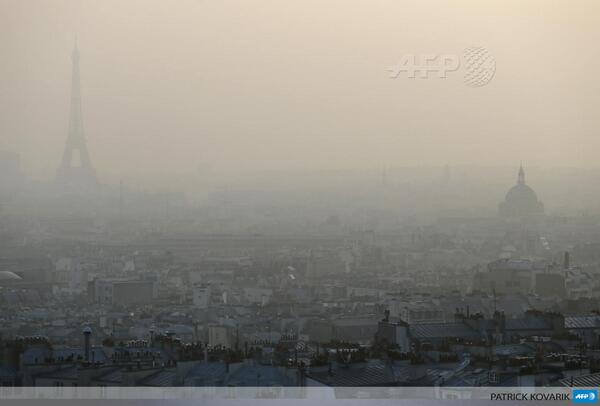
Paris air pollution so bad officials are temporarily making public transport free – link

While it’s only for three days and it’s only because of unseasonably warm weather (and it’s only March), this is a warning of what is to come. Other quotes in the article:

  • reduced the maximum speed allowed on main roads
  • the air is expected to remain exceptionally unhealthy
  • significant risks to the health of residents
  • air quality was “an emergency and a priority for the government”.
  • classified outdoor air pollution as “carcinogenic to humans”

Why do we have to wait until it’s about to kill us before we will act?

Public Education was a challenge in the 19th Century. Public Transport is our challenge.

Sir Ken Robinson: The problem is that the current system of education was designed and conceived and structured for a different age. It was conceived in the intellectual culture of the Enlightenment, and in the economic circumstances of the Industrial Revolution. Before the middle of the 19th Century, there were no systems of public education. … Continue reading “Public Education was a challenge in the 19th Century. Public Transport is our challenge.”

Sir Ken Robinson:

The problem is that the current system of education was designed and conceived and structured for a different age.
It was conceived in the intellectual culture of the Enlightenment, and in the economic circumstances of the Industrial Revolution. Before the middle of the 19th Century, there were no systems of public education.

But public education, paid for from taxation, compulsory to everybody, and free at the point of delivery – that was a revolutionary idea. And many people objected to it. They said it’s not possible for many street kids, working class children to benefit from public education.

Free public transport, paid for by taxation, available to everyone and free at the point of delivery. That’s a revolutionary idea. And many people are objecting to it. They say that the system will be abused by “those people” without directly pointing the finger at low income individuals and families – those who the system will benefit the most.

How long can Northern Ireland tolerate a public transportation system that is simply unfit for purpose? Where rush hour buses are 2/3 empty? Where the expense of using it is grudgingly similar to a car for a single person but absolutely intolerable for a family journey? Where the process of getting a bus hasn’t changed in over 30 years? Where the caretaker company has deliberately obstructed attempts to use technology to improve public transport uptake? Where they have repeatedly made dubious investments in technology which were more concerned with correct billing of customers rather than making it easier and more convenient for customers.

The benefits to economic and social mobility, the improvements in quality of life and the benefits to environment, community are all easily extrapolated from other regions who have decided to serve their citizens better. And the reduction in traffic on the roads would be of immense benefit to those people who, for their own reasons, have to drive.

I measure transportation on three axes. Reliability, Flexibility and Cost. Buses will never be as flexible as owning your own car. Therefore you have to make the system 100% reliable or do something with the cost.

The reliability of the bus system is affected by traffic, primarily, so to increase reliability, you have to decrease the number of cars on the roads. So you have to look at costs.

To get people out of their cars, to increase the reliability of the system, you have to make it that the individual would be crazy to use a car (or would have it mandated by their employer).

The only leverage you have is cost. Make it so cheap that only special cases would choose to use private transport. And at some point, the machinery, the collection and the transport and security over collecting the money becomes uneconomical in itself. The process of collecting the money becomes the barrier to collecting the money. So you make it free.

You guarantee the right of mobility to citizens and tourists alike. You energise the individual and the family to travel the length and breadth of Northern Ireland cost-free. To spend their hard-earned cash in other areas.

You enable the individual to choose to work in the next town, commuting every morning without having to consider the percentage that commute will take out of his or her minimum wage job. You empower people to take advantage of employment.

You encourage travel across the province for tourism, helping to resolve an issue that the vast majority of visitors to Northern Ireland do not leave the cities.

Even if you are a dyed-in-the-wool petrol head, a decrease of traffic should interest you. A reduction in the wear and tear on the roads should interest you. Even if you never use a bus, you could start to think of those for whom public transport is the only opportunity to move beyond their immediate community and the positive effects that could have on our society.