A First For Apple

Much has been made of the new M1 processor-equipped Macs from Apple – the fabless MacBook Air, the diminutive Mac mini and the peerless MacBook Pro 13″. They’re currently wowing everyone with their power efficiency (and battery life in the laptops) and their heat characteristics (they’re silent or fanless) and lastly, and probably most relevantly, their speed. They’re toasting the vast majority of x86 (Intel and AMD)-based PCs out there and faster for most people than any previous Mac. And they’re available for new low prices which make it a no-brainier for businesses to invest in one for testing purposes.

The speed isn’t just about how quickly they can render video or process images, it’s all about the useful life of the device as well. My guess is that Apple just extended the useful life of a Mac by a couple of years – and this is a series of machines that routinely is a workhorse for 5-10 years.

I can’t give a better illustration than a render I did last night (I haven’t got my M1 Mac yet) from an 2016-vintage Intel MacBook Pro 13″. It took 2.5 times the length of the footage to render out (1080p). When I did a similar export from my iPad Pro 2020 model, it took a fifth of the length of the footage to render. These devices are a lot faster than the latest models and they’re even faster than the ones they’re intending to replace.

So, it’s great that Apple is currently vending the fastest laptops and micro-desktops on the market.

But that’s not the first I’m talking about.

Apple has always made great hay out of being a system designer. That the tight integration of their hardware and software makes for great computers. We were able to see this with iPhone and iPad – devices which are much lower specifications on paper, but which easily smoke the competition in benchmarks and real-world usage. And this is the thing – it’s only been a few years that Apple has been designing their own chips for the i-Devices. Before that they were like everyone else – using someone else’s chips.

They bought chips from Intel for the Intel Macs.

They bought chips from IBM for the PowerPC.

They bought chips from ARM and Intel for the Newtons.

And they bought the 68K processor series from Motorola for the original “classic” Macs.

This is the first time that Apple can honestly talk about an integrated system when it comes to the Mac. This is hardware designed for software. This is software designed for hardware. This is the dream that Apple has been flogging for nearly five decades. It came to light with the iPhone, it’s come to full truth with the M1 Macs.

Finally!

The M1 Processor is not designed for the high end. It’s fast, but look at that IO. Only one controller (for thunderbolt/USB) which means a limited pipe in. And it’s hardware wired for a maximum of 16 GB of RAM.
There’s room fo something else.

The next thing on the agenda is what happens with the higher-end Macs. Is there a need for an iMac Pro or is it just the “best” in Apple’s traditional Good/Better/Best product matrix? Will there now be room in the product roadmap for a thin and light return to the MacBook form factor? What’s a Mac Pro going to look like? Is there finally room for a Macintosh computer that’s got some expansion (like the Mac Pro) but sits on a desktop? Maybe for one Mac that can take an internal graphics card without having to buy a high end Workstation-class machine that consumes the power of a small mid-American town in winter.

Will this be like the i-Devices – with a M1X and an M1Z on the horizon? Or will Apple go all-in with a whole new no-holds-barred series (I’m calling them P1) which has multiple controllers, a special bridge to expandable RAM and up to 64GB of RAM on the SOC.

Will Apple be chasing the graphics market next? After decades of being poorly served by the graphics companies out there, isn’t it time they served themselves? They’ve been pushing Metal hard for exactly this reason. And Apple is always keen to provide a solution when the market has been providing something substandard and getting away with it.

Hydrogen

I don’t think that hydrogen is going to be a satisfactory alternative. We need to get out of the mindset of choosing finite resources (we only have a finite amount of hydrogen on earth). We end up just moving the problem down the road. Remembering that the water on our planet is finite and it’s a thin skin on the surface of the Earth should be sobering. Remembering that every hydrogen transaction is lossy. And every hydrogen escape is a permanent loss to the planet.

It’s the same with nuclear. Hydrogen is not renewable, nuclear is not clean.

Much of the energy we use is tied up in cars – they’re horrendously inefficient. Not just in the energy conversion (~70% loss) but in the transportation of 100 kgs of human, we have to also transport 900 kgs of car (and that’s for an average one). So, when you think about it, only 3% of the energy we put in the tank is used to transport a human. Electric cars won’t save us from this – they’re a band aid (and they’re even heavier)

(I question the symbolism of Wrightbus in the photo. I question the commitment of the minister from a party of climate-disruption denialism. I question the use of hydrogen for storage – after all, it’s not like hydrogen under pressure has been a problem in the past.)

Take the long view. Build civilisations to last.

Is the 30% AppStore tax fair?

The AppStore is a software aggregator. It’s not the first, it won’t be the last.

About 100 years ago, in the early 2000s, I was buying software for my phone and Palm Vx. I used various software aggregators (Handango being one) and I remember what a rigmarole it was. You really had no idea what you were buying, sometimes a “sticker” set was nothing more than clip art and there was zero recourse if it didn’t work or if you wanted a refund. What’s more, Handango was a revolution in itself as it only took 40% of the cover price. Other aggregators for other mobile operating systems took 40-90%. You’re reading that right. If you got significant success, you ended up paying 90% of cover price to the aggregator. It was like the sliding tax rate but you were really just lining pockets rather than paying for roads and schools.

Then Everything Changed

The AppStore came along and everything changed.

It was hailed as a revolution. A single point of access, installed on every device, taking only 30% and people could trust the vendor – it was the same vendor they’d spent the last few years buying music from. What could be better. Developers would get access to millions of customers overnight, for a small fee which included a code-signing certificate and there were all these dev tools. Sure, it wasn’t perfect by any means and it still isn’t but it’s a damn sight better than it was.

So what’s the fuss?

Some vendors who rely on tight margin subscriptions aren’t happy with the 30%. They’re just pissy with it. It’s hitting on an underlying business model of tight margins. (I’m talking mostly about Spotify and Amazon but it would equally apply to anyone). Their models don’t work if Apple takes 30%. But even then they adapted to while I can’t buy a Kindle book through the Amazon app or the Kindle app, I can just pop onto the web site and it works fine. But it is a little bit of friction.

So, what’s to be done for sharecroppers who are happy to give away an app for free and then use the platform for promotion and distribution without contributing to the baseline? Surely most developers who charge a reasonable amount for their apps would be thinking “No….Amazon shouldn’t be getting a free ride at all!”. But instead it’s really focused the camera on whether Apple’s 30% is reasonable in this day and age.

What percentage would mollify the masses?

There’s really no right answer for this. Some people would only be content with 0%. Thinking that they bring so much to the Apple ecosystem that Apple shouldn’t be making money off the ecosystem. Others might think that 20% or 10% is a good number considering that storage, network costs and compute costs have dropped considerably in the last 12 years. Some folks are happy enough with the 30% but would like the option to offer their own stores, with their own payment systems or the ability to side-load content. There will, like Brexit, be no one single solution that would make everyone happy (and by everyone I include Apple here).

But it does feel like the time is ripe for Apple to rethink the model. To re-evaluate what makes developing on their platform so compelling and to reward those who have made great apps. Maybe it’s dropping the percentage for those who support universal binaries? Or who have switched to Swift 100%. Or those who stick to some other set of rules? Maybe those who do well should get a sliding scale?

Gruber and Gassee used to agree with the Apple Store but have things changed?

Betteridges Law Applies. As Ever

I’m a fan of Betteridges Law. This rule of thumb decrees that the answer to a headline question is always “no” and so I’ll have to apply it here.

Times have changed. Costs have changed. The market has changed. So maybe it’s time to cut developers a bit more slack.

Announcing Digital Circle…

In 2007, industry, academia and government worked together to produce the Northern Ireland Digital Content Strategy – a timely document that paved the way to the Digital Circle collaborative network and several years of rapid growth in our local industry. Timely because it arrived just before a sea change in the market – the advent of the smartphone for everyone and the emergence of the App economy. With a steering group made up of industry professionals and solid support from the IT industry trade body, Digital Circle grew rapidly and was able to respond to changes in the market – from apps, to games, to augmented reality (it’s a big deal now but we had active projects in AR in Northern Ireland in 2011.)

The project officially ended in 2011 but continued to work until 2015 but after the demise of the IT industry trade body, and policy changes in government, practical support waned. Meanwhile, the skills shortages predicted in the strategy proved to be conservative. Salaries for developers have soared, leaving many to outsource their development to other countries – and with that, the opportunity cost in money flowing out of the region and skills and intellectual property being domiciled elsewhere.

With the ending of the Creative Industries Innovation Fund (and fewer interventions like HoneyComb, Creative Marketplace, Games on Film) there was a massive loss in terms of finance. This investment hadn’t always been a runaway success but there were some properties created which, in terms of value, exceeded the entire investment of the fund over its lifetime and all because of an initial £10,000 grant.

And one of the other pillars of Digital Circle (and the strategy) was internationalisation and access to markets. With the impending uncertainty over Brexit, investment has declined and we still don’t know what we have to prepare for. At the time of writing, we haven’t had a government in Northern Ireland in 1000 days. In the face of impending uncertainty and adversity, we feel there’s a need to invest.

Digital Circle is very pleased to announce an ongoing partnership with RAISE Ventures to give the network a home. RAISE brings a physical space, relationships, a programme of events, and a mechanism for private finance to the deal. We are working with RAISE for representation in government programmes (like the Digital Skills strategy, Future Screens NI) as well as championing startups and high potential startups within the region.

See you at the RAISE on Wednesday 16th October.
Don’t ban scooters. Redesign streets.

[Read the article] Of course, some of us have been saying this for years. Remember when the Segway debuted? There was a reported conversation that everyone derided. Apparently Steve Jobs, on viewing the prototype Segway with Dean Kamen, said that we would design cities around this thing. It was backed publicly and financially by Jeff … Continue reading “Don’t ban scooters. Redesign streets.”

[Read the article]

Of course, some of us have been saying this for years.

Remember when the Segway debuted? There was a reported conversation that everyone derided. Apparently Steve Jobs, on viewing the prototype Segway with Dean Kamen, said that we would design cities around this thing. It was backed publicly and financially by Jeff Bezos.

How the media laughed.

And now the media are calling for us to redesign cities to cope with new PEV (personal electric vehicles) designs. Of course, all of this is a little moot for the UK as the Tory government failed to deliver an election promise on licensing for LEVs and PEVs and of course, our government couldn’t do it because we don’t have one.*

But watch this space because things are afoot. They’ve extended the bus lanes on one of the busiest roads in Belfast. They’re introducing a new bus called the Glider which will, like this recently multi-million investment in dumb ticketing machines at major stops, will be utterly underwhelming. They’re going to close the area around Belfast City Hall to private traffic. They’re going to invest massively in the Westlink-M2 exchange yet not actually address the cause of queues in the morning. But that’s because …. I don’t know. I’m sure they have great reasons.

*and do you ever notice that when change is needed, politicians decide on whether it’s a devolved matter or not depending on how close it is to lunchtime.

Save the Day: 30th June 2025

Save the date, 9 years from now, when the last ICE (internal combustion engine) car will be sold in the UK. This is what is being proposed by Norway and it’s being considered by other nations within the EU and beyond. A complete change in the way transport works. Back in 1905, you could look … Continue reading “Save the Day: 30th June 2025”

Save the date, 9 years from now, when the last ICE (internal combustion engine) car will be sold in the UK.

This is what is being proposed by Norway and it’s being considered by other nations within the EU and beyond. A complete change in the way transport works.

Back in 1905, you could look at a photo of Times Square and not see a single car; the place was filled with horse drawn carriages. By 1913, the horses were outnumbered by the cars perhaps 100:1. That’s how fast a disruptive technology can take hold.
So what will happen here. We are already seeing Electric Vehicle sales rise (though they slipped slightly due to the brief drop in petrol and diesel prices over the last six months). And we will see them rise even more. On my Twitter feed (admittedly a self-selecting study of people interested in transport, innovation and renewables), I am able to see individuals who charge their home automobiles using a solar panel and wind combination to a domestic battery that then feeds their car.

This becomes the new normal. Where the cost of running a vehicle decreases to just the replacement of tyres and brake pads. Where the massive fuel costs dwindle to almost nothing. We aren’t there yet….or….more accurately, I’m describing the past, but it’s still the future for most of us.

My own car is up for replacement this year but there is no way I will replace it with an ICE vehicle – even though I might consider the vast majority of electric vehicles out there to be under-engineered, under-designed and under-inspiring. What we need a series of over-engineered, over-designed and absolutely inspiring cars.

At the moment only TESLA is providing that. Sticking a battery and electric motor into a Clio and calling it a LEAF just doesn’t do it for me. Making an eGolf or an electric BMW doesn’t do it. – especially as it’s beginning to look like all of the incumbent car manufacturers seem, without exception, to have been lying about their gas emissions.

It’s time we started thinking about this seriously.

What if we just stopped using Fossil Fuels. Today.
What if we replaced essential use of hydrocarbons with Renewable Gases?
What if we replaced inessential fuel consumption with solar, hydro and wind?
What if we circumvented the apocalypse by just taking action rather than just talking about it?

Solar…portable…renewable

Anyone who knows me will know that I’ve always been a fan of solar (photovoltaic) energy production. This goes from tiny little solar panels that I used with Coder Dojo to wire up fans and LEDs to larger scale panels that are used to keep my phones and other devices charged when out and about. … Continue reading “Solar…portable…renewable”

Anyone who knows me will know that I’ve always been a fan of solar (photovoltaic) energy production. This goes from tiny little solar panels that I used with Coder Dojo to wire up fans and LEDs to larger scale panels that are used to keep my phones and other devices charged when out and about.

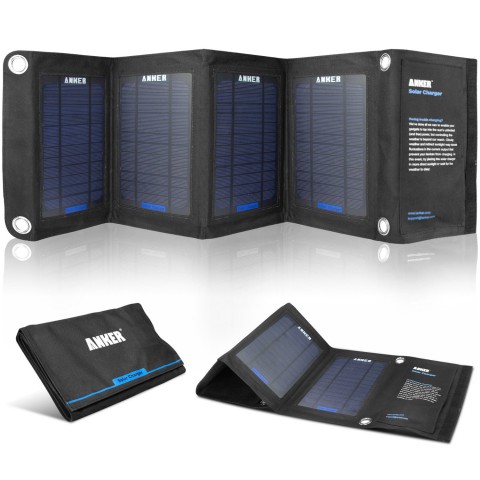
My latest purchase is the Anker 14W Solar Panel Foldable Dual-port Solar Charger.

I was pretty pleased with the package – it was smaller than I expected and seemed sturdy enough. It fits neatly into my hiking backpack when I’m not using it and when I am using it, I’ll tie it using cords to the back of the back – the built-in rings seem very resilient. The company advises using the included pockets for holding devices you’re charging (to keep them out of the direct sunshine). I’d like them to be a little bigger but that’s only because my devices are a little bulkier.

Anker14WSolarCharger

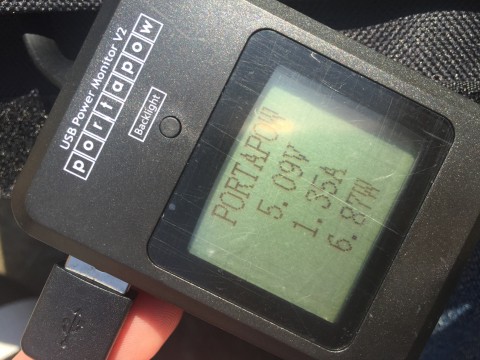
I tested this during the week in some weak summer sunshine here in Northern Ireland and I was able to generate nearly 7 Watts (5.09 Volts, 1.35 Amps). That’s about 50% of the potential output of the panel but considering I was just sitting in a park with plenty of surrounding tree cover, no effort being made to optimise the angle and a little bit of cloud cover – coupled with the weak Northern Irish sunshine – I was happy to see I could easily power and charge a phone.

IMG_2231

Your phone likely needs 5 Watts of Power (5 Volts, 1 Amp). The average PC USB port outputs 2.5 W (5V, 0.5A). Your iPad needs about 12 W (5.1V, 2.1A). The device I’m using to measure this is a pass-thru USB power monitor by PortaPow. It can check any USB port for power output and is cheap as chips. For the aspiring geek it’s a useful informational tool.

I’ll be using this panel to charge an Anker 13000 mAh portable battery (superseded by newer models like the Anker Astro e7 with double the capacity). 25600 mAh seems like a lot but the iPhone 6 has a 1810 mAh battery and therefore I’d expect to get 10 charges out of this. Which should be good enough for a week of outdoor usage (assuming I’m using the screen a lot).

Next week I’ll be testing the charger in Southern Spain. I’m interested to see what the difference in throughput will be and how fast it will charge my external battery.

UK Technology and Business Cluster Summit

From here. Attending a cluster of clusters in digital. It’s quite interesting. Lots of really clever people. Related posts: London, City of the Future Digital Circle going independent and my thoughts on the Future We want to do more. Highlights: Neelie Kroes at the 2011 Digital Agenda Summit organised by the Lisbon Council

From here.

Attending a cluster of clusters in digital. It’s quite interesting. Lots of really clever people.

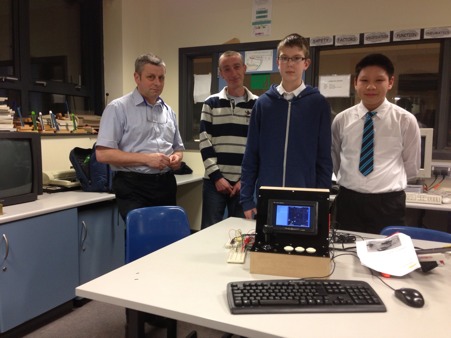
Pi-Cade Project Team at Bangor Academy

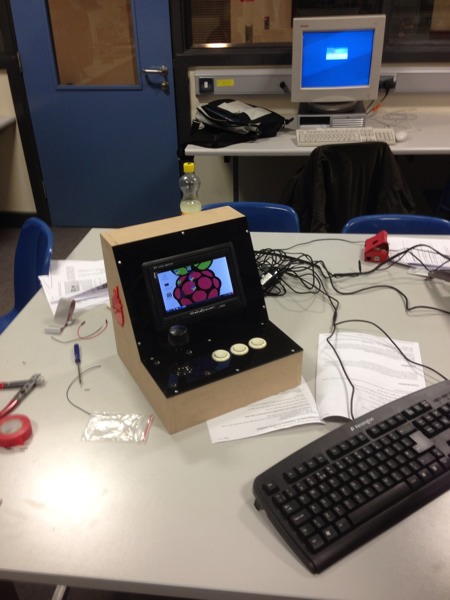
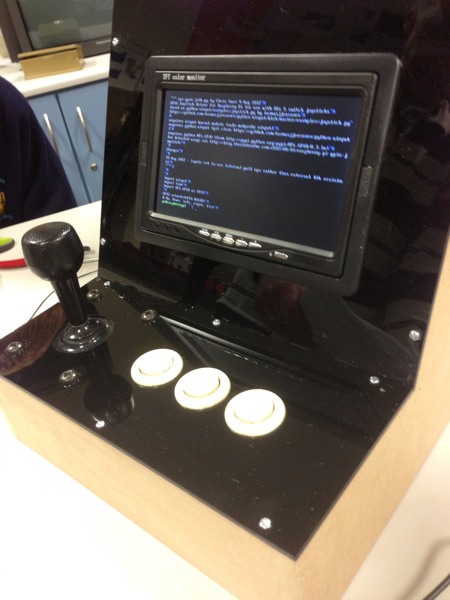
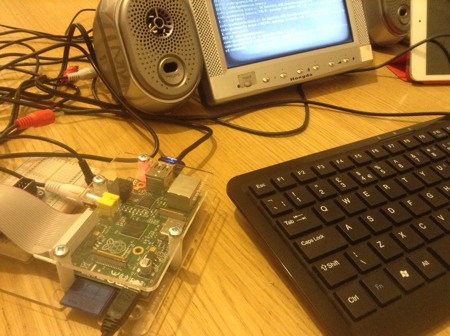
Ingredients: + Case designed and constructed + Electronic bits and bobs (wires, breadboard) + Car reversing monitor screen (with separate power) + Raspberry Pi with 5V power + SD card + Salvaged and donated joystick and buttons Special thanks to Mr Pollock ([Bangor Academy](http://www.bangoracademy.org.uk/) Technology Dept) and Steve Sloan (Momentum/All Island Software Network) for getting … Continue reading “Pi-Cade Project Team at Bangor Academy”

Ingredients:

+ Case designed and constructed
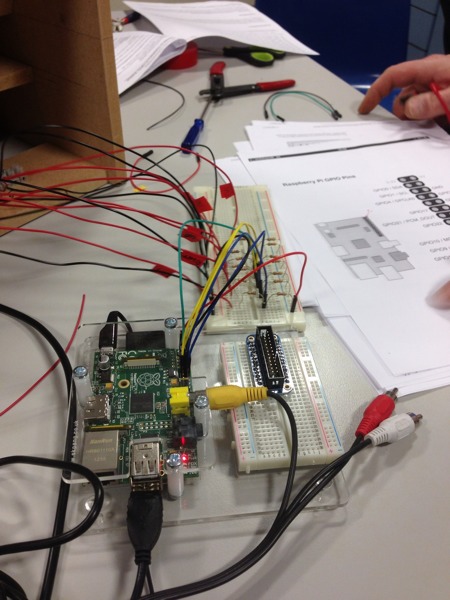
+ Electronic bits and bobs (wires, breadboard)
+ Car reversing monitor screen (with separate power)
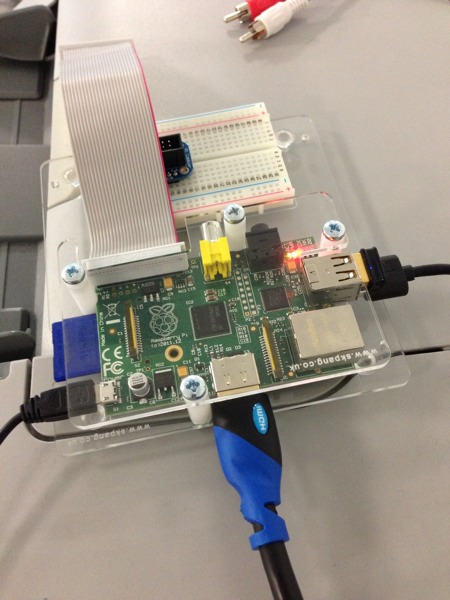
+ Raspberry Pi with 5V power
+ SD card
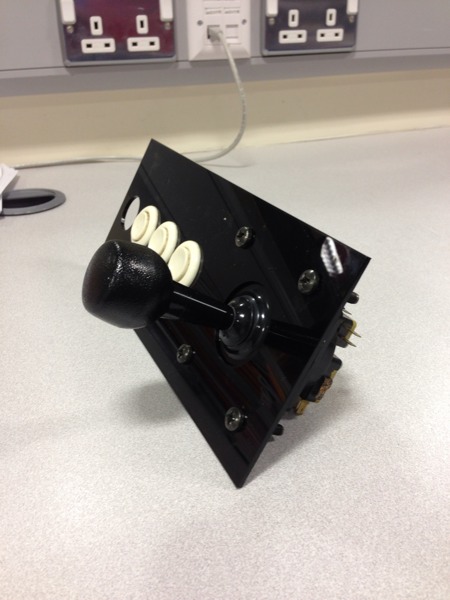
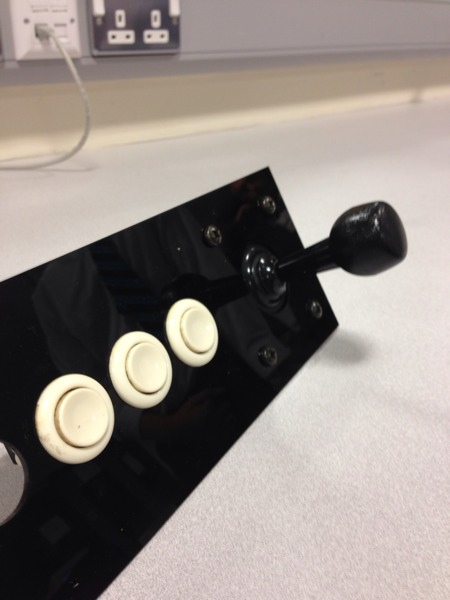
+ Salvaged and donated joystick and buttons

Special thanks to Mr Pollock ([Bangor Academy](http://www.bangoracademy.org.uk/) Technology Dept) and Steve Sloan (Momentum/All Island Software Network) for getting things moving.

Digital Circle does Computing Clubs

For the past few weeks, I’ve been helping Bangor Academy with a Raspberry Pi project. I had attended the school with Young Enterprise and the VP asked if I would be interested in helping them out with a project. As I lack the ability to say ‘No’ to good ideas, I agreed. The project was … Continue reading “Digital Circle does Computing Clubs”

For the past few weeks, I’ve been helping Bangor Academy with a Raspberry Pi project.

I had attended the school with Young Enterprise and the VP asked if I would be interested in helping them out with a project. As I lack the ability to say ‘No’ to good ideas, I agreed. The project was determined to be a Pi-Cade; a mini-arcade machine that could fit on a desk that was operated by a Raspberry Pi.

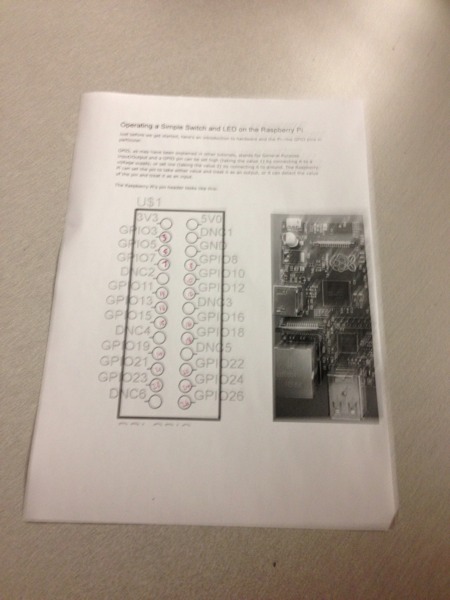
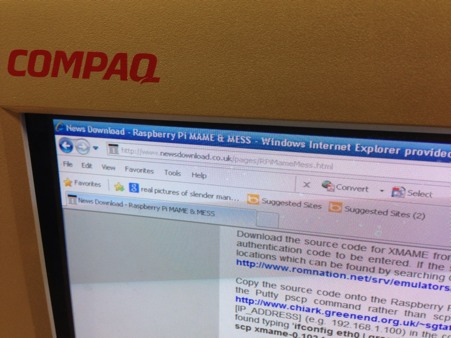
Today we were joined by Andrew Bolster from Farset Labs and Stephen Sloan from the All Island Software Network (part of Momentum). They worked with the teacher and kids to discover the intricacies of the GPIO pins, breakout boards, shoot the breeze about Arduino and try our damnedest to get MAME to compile on the device.

All in all it was great fun, even when we ran into an immovable object.

C2K block anything useful; getting the source and binaries for anything was made anything between ‘more difficult’ and ‘impossible’. We had to use an iPad mini 3G (in the Faraday Cage of school building) running GoodReader to download the modified xmame source and then transfer to a Mac over USB onto a USB stick so we could load it onto the Pi. Thanks, C2K.

Anyway, thanks to the students, to Mr Pollock (the teacher) and Andrew and Stephen, we’re making some progress.

The equipment and time I’m putting into this is kindly given by Momentum. There have been some other donors too and we’ll thank them specially when everything works. And special thanks to @vedanator for the joysticks and buttons at the last minute (ours haven’t arrived from adafruit.com yet)